

If you’re exploring orthodontic treatment for yourself or your child, one of the first questions that comes to mind is: does dental insurance cover braces? The answer is yes in many cases, but most dental insurance plans only cover part of the cost. Coverage depends on your specific policy, your age, and the type of orthodontic care you need.
Understanding how dental insurance works for braces can help you avoid surprises and plan your treatment budget with confidence. In this guide, we explain how orthodontic coverage works, what limitations to expect, and how to make the most of your benefits before starting treatment.

Does Dental Insurance Typically Cover Braces?
Most dental insurance plans that include orthodontic benefits will cover a portion of braces, not the full cost. Coverage commonly ranges from 25% to 50%, subject to a lifetime maximum benefit. That means once the plan has paid out its cap, you’re responsible for the rest.
There’s also a key distinction between pediatric and adult coverage:
Pediatric orthodontic coverage
Children under 18 are more likely to have orthodontic benefits included in their dental insurance plans, especially through employer-sponsored coverage.
Adult orthodontic coverage
Adults often have fewer orthodontic benefits. Some plans exclude adult braces entirely, while others provide partial coverage with lower lifetime limits.
Because every plan is different, it’s important to review the details carefully before starting orthodontic care.
If you’re exploring treatment options, learning about available orthodontic services can also help you understand which treatments may qualify for coverage.
What Types of Dental Insurance Cover Orthodontic Treatment?
Not all plans are created equal. Here’s a quick breakdown of common plan types and how they typically handle orthodontic care:
- PPO Dental Plans:
Preferred Provider Organization (PPO) plans are the most common type of dental insurance. They typically offer the most flexibility and often include orthodontic coverage. Patients can choose in-network or out-of-network providers, although in-network treatment usually costs less.
- HMO Dental Plans:
Health Maintenance Organization (HMO) plans are more restrictive. Patients must use dentists and orthodontists within the plan network. Orthodontic coverage may be limited and sometimes requires a referral.
- Dental Discount Plans:
Discount plans are not traditional insurance. Instead of paying a percentage of treatment, they provide reduced rates for participating providers. These plans can still help lower the cost of braces.
- Employer-Sponsored Plans:
- Many employers offer dental insurance plans that include orthodontic benefits. The level of coverage varies depending on the plan selected by the employer.Private/Individual Plans:
Individuals who purchase private plans may find orthodontic coverage included in higher-tier plans. However, these plans sometimes include waiting periods before orthodontic benefits begin.
- Medicaid:
In the United States, Medicaid may cover orthodontic treatment for children if it is considered medically necessary. Adult coverage is much more limited and varies by state.
If you’re unsure which category your plan falls into, the member services number on the back of your insurance card is the best place to start.
How Much Do Braces Cost With Insurance?
Braces are a long-term investment in oral health. In the United States, orthodontic treatment typically costs between $3,000 and $7,000, depending on the type of braces and the complexity of the case.
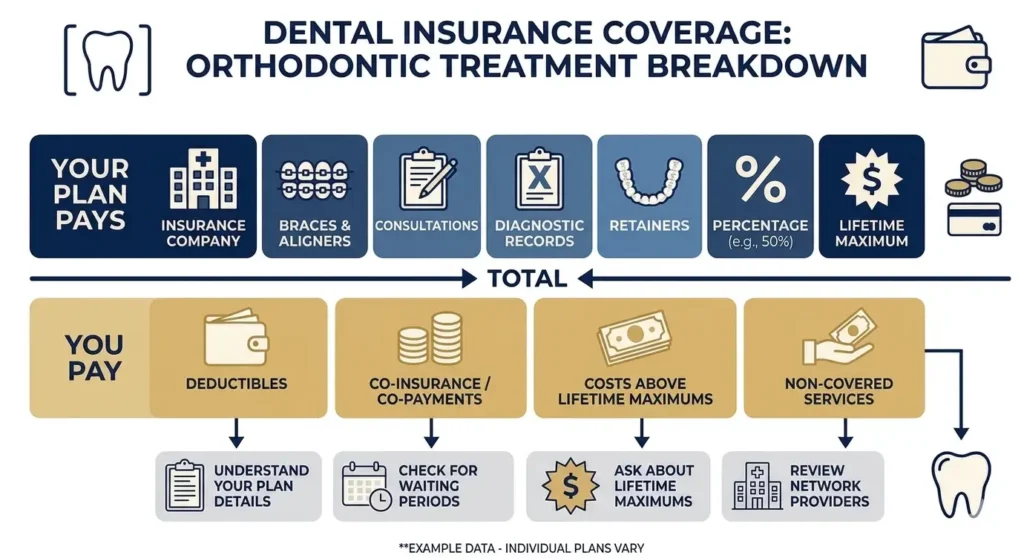
When orthodontic insurance is included, most plans cover only a portion of this cost. Typically, insurers pay 25% to 50% of treatment until a lifetime maximum is reached.
For example:
- Total treatment cost: $5,000
- Insurance coverage: 50%
- Lifetime maximum: $1,500
In this situation, the insurance plan would pay $1,500, and the remaining $3,500 would be the patient’s responsibility.
Because of these limits, it’s important to understand exactly how much orthodontic coverage your plan provides before starting treatment.
What Factors Affect Orthodontic Coverage?
Even if your dental insurance plan includes orthodontic benefits, several factors can limit or eliminate that coverage:
- Age Limits: Many plans only cover orthodontics for dependents under 18. If you’re considering adult orthodontic treatment, confirm whether your plan extends coverage to adults before scheduling.
- Waiting Periods: Some plans require 12 to 24 months of enrollment before orthodontic benefits kick in. Starting treatment before that window closes means paying out of pocket.
- Medical Necessity: Insurance is more likely to cover treatment deemed medically necessary, such as severe misalignment affecting bite function, than purely cosmetic improvements.
- Network Provider: Using an in-network orthodontist often results in higher coverage and lower out-of-pocket costs. Out-of-network providers may reduce reimbursement.
Lifetime Maximum Limits: Unlike other dental benefits that reset each year, orthodontic coverage usually includes a lifetime maximum benefit. Once that maximum is reached, insurance will not contribute additional payments toward braces.

What If Insurance Doesn’t Cover Braces?
Even without insurance, orthodontic treatment can still be affordable. Many practices offer flexible solutions to help patients manage costs.
- In-Office Payment Plans: Many orthodontic practices offer monthly payment plans spread across the length of treatment, making costs more manageable without large upfront payments.
- HSAs and FSAs: Health Savings Accounts and Flexible Spending Accounts can be used to pay for braces with pre-tax dollars, which effectively lowers your overall out-of-pocket cost.
- Healthcare Financing: Third-party healthcare financing options may offer payment plans with low or zero interest for qualifying patients.
- Flexible Practice Financing: Many orthodontic offices also provide their own payment options designed to make treatment accessible for families.
Contact our office directly to learn about the flexible payment arrangements available at our practice.
How to Check Your Orthodontic Insurance Benefits
Before starting treatment, it’s helpful to verify exactly what your orthodontic insurance benefits include.
Follow these steps:
- Locate your insurance card and find the member services phone number on the back.
- Call your insurance provider and ask specifically about orthodontic benefits, not just general dental coverage.
- Ask these key questions:
- Does my plan include orthodontic benefits?
- What is my lifetime orthodontic maximum?
- What percentage of treatment costs are covered?
- Are there age restrictions?
- Is there a waiting period I haven’t completed yet?
- Do I need to use an in-network orthodontist?
- Request a benefits summary in writing or note the reference number for your call.
- Share this information with your orthodontist’s office. They can often help verify coverage directly with your insurer and give you a clearer picture of expected costs before you commit to a treatment plan.
Taking time to complete these steps before starting treatment can prevent unexpected bills down the road.
Why Choosing the Right Orthodontist Matters
Understanding insurance benefits can be complicated. The right orthodontist will help simplify the process and guide you through your options.
An experienced orthodontic practice can:
- Verify your orthodontic insurance coverage before treatment begins
- Clearly explain what your dental insurance plan covers
- Provide transparent pricing and treatment estimates
- Offer flexible payment solutions that fit your budget
- Recommend the most effective treatment for your needs
Whether you’re looking into early orthodontic treatment for children or braces for yourself, a practice that actively supports you through the financial process makes the entire experience significantly less stressful.

Schedule a Consultation to Understand Your Options
You don’t have to navigate insurance alone. At Dr. Murray Orthodontics, our team helps patients understand their dental insurance benefits, estimate treatment costs, and explore flexible payment options that make braces more accessible.
Schedule a visit today and take the first step toward a confident, healthy smile with full clarity on what it will cost.
Have questions before your visit? Contact our office and we’ll be happy to walk you through your benefits.
