

If you’ve just finished braces or aligners, your next step is just as important as the treatment itself. A retainer helps keep your teeth in their new positions while your mouth adjusts. Many patients ask, how long do you have to wear retainers? The answer usually follows a short full-time phase and a longer maintenance phase.
Retainer timeline at a glance:
- First months: Wear most of the day (removed only for eating and cleaning)
- Months 6–12: Gradually reduce daytime wear as stability improves
- Long term: Nighttime wear to prevent relapse and shifting

What Is a Retainer and Why Is It Needed After Braces?
A retainer is a custom-made orthodontic appliance that holds teeth in place after braces or aligners. Understanding the full braces treatment process helps explain why retention is a critical final step. That settling process is called the orthodontic retention phase.
Without a retainer after braces, teeth can drift toward old positions. This is called orthodontic relapse, and this can happen because of:
- Natural tissue “memory”
- Jaw growth or age-related changes
- Habits like clenching or grinding
Retainers provide long-term smile stability, giving your teeth the support they need after active treatment.
How Long Do You Have to Wear Retainers?
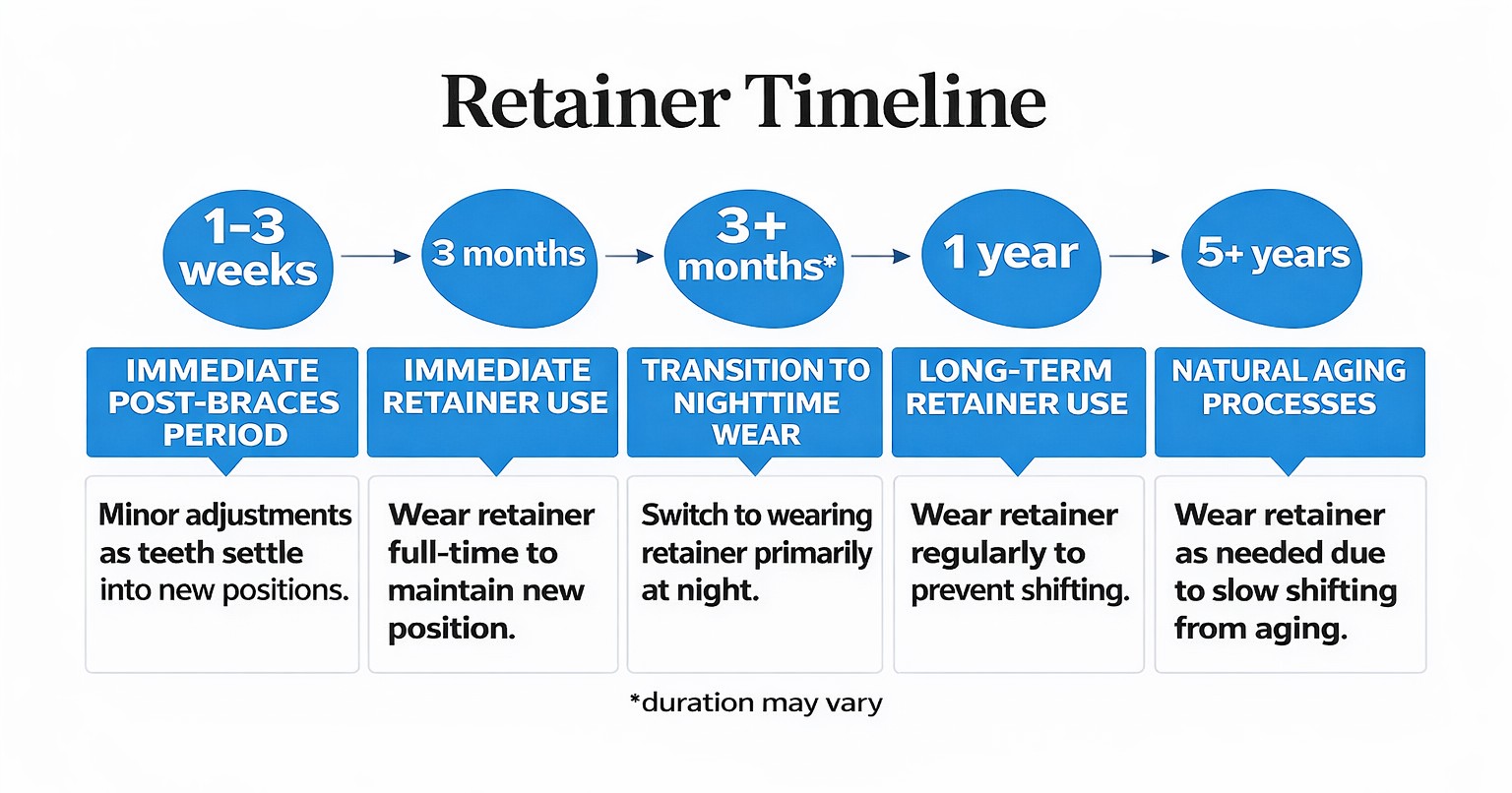
The goal of retention is to keep your teeth stable while your mouth adjusts to its new alignment. There isn’t one universal orthodontic retainers timeline, but most plans follow a predictable pattern based on how teeth respond after treatment.
First Year After Braces
The first year is the highest-risk period for teeth shifting. During this time, your orthodontist may recommend:
- Early phase: 20–22 hours per day (removed only for eating, drinking anything besides water, and hygiene)
- Transition phase: reduced daytime wear as stability improves
- Follow-ups: retainer fit checks to confirm your teeth are holding
Consistency is key. If a removable retainer feels tight, it may indicate movement. Don’t force it, contact your orthodontist instead.
Long-Term or Nighttime Wear
After the first year, most people shift into maintenance mode. That typically means nighttime wear so your smile stays stable even as your bite, jaw, and tissues change over time.
A common long-term plan includes:
- Wearing your retainer every night while sleeping
- Continuing that schedule long term unless your orthodontist changes it
- Monitoring fit; a retainer that suddenly feels tight may indicate movement
The rule is simple: consistent wear reduces the chance of needing retreatment later.
Do You Have to Wear a Retainer Forever?
It’s normal to wonder, do you have to wear a retainer forever? “Forever” sounds overwhelming, but in practice, it usually means a simple bedtime habit. Teeth aren’t locked in place for life, they can shift due to age, jaw changes, gum health, or even dental work.
Many orthodontists recommend nighttime wear indefinitely because it’s the most reliable way to prevent orthodontic relapse. Some patients may eventually reduce frequency, but that decision should be made with your orthodontist based on stability and retainer fit. The goal is long-term smile stability, not a rigid rule for everyone.

What Happens If You Stop Wearing Your Retainer?
If you stop wearing your retainer, teeth can start to move sooner than expected. What happens next depends on how long the retainer is off and how your teeth respond.
Common outcomes include:
- Teeth shifting after braces, especially in the front teeth
- A removable retainer no longer fitting comfortably
- Small gaps or crowding returning over time
- A need for additional treatment if movement becomes significant
If you’ve missed a short period, resuming your plan immediately may restore stability. If the retainer doesn’t fit or causes discomfort, don’t force it. Contact your orthodontist to prevent damage to your teeth or appliance.
Types of Retainers and How They Affect Wear Time
Retainer type can affect comfort, durability, and how strict your wear schedule needs to be. Your orthodontist will recommend an option based on your bite, treatment history, and risk of relapse.
Common retainer options include:
- Clear removable retainers: slim, transparent, easy to wear at night; can warp with heat
- Hawley retainers: acrylic and wire; adjustable and durable; more noticeable than clear retainers
- Fixed retainers: bonded wire behind teeth; worn continuously; requires careful brushing and flossing
Many patients do well with one type, while some use a combination. For example, a fixed lower retainer with an upper removable retainer at night can provide extra stability for high-risk cases. Regardless of type, consistent retainer use is the key factor in protecting your results.

Tips for Making Retainer Wear Part of Your Routine
Consistency is easier when it’s automatic. The goal is a routine you can maintain for years, not just weeks.
Tips that help many patients:
- Store your retainer in its case whenever it’s out of your mouth
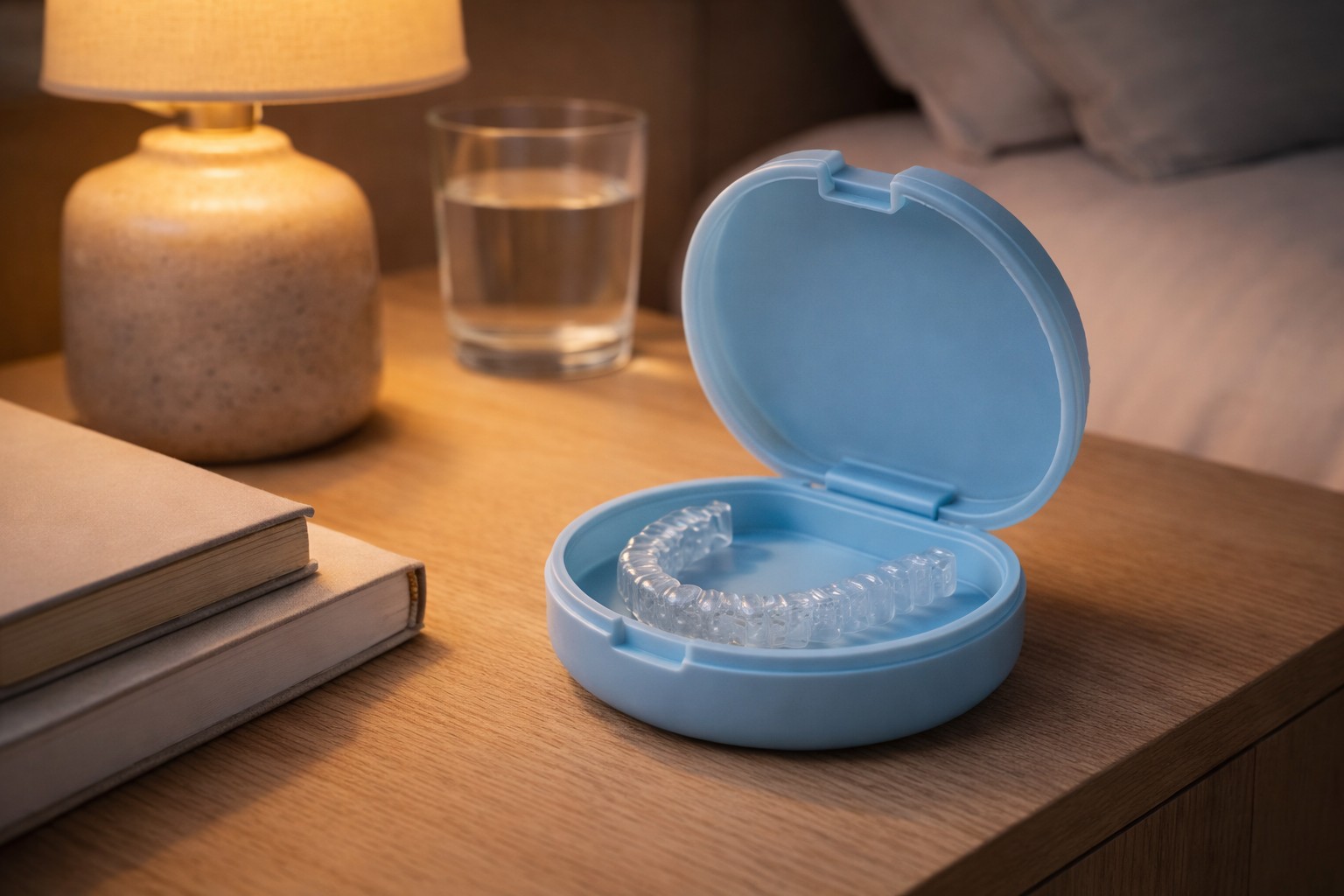
- Keep the case by your toothbrush or bedside table
- Set a repeating nightly reminder until it becomes a habit
- Clean it daily and avoid hot water that can distort plastic
- Bring your retainer to checkups so your orthodontist can verify fit
If you’re unsure what your long-term retainer plan should look like, our orthodontic team can help clarify next steps.
How Your Orthodontist Determines Your Retainer Plan
Retention planning may also differ depending on whether treatment was completed with braces or clear aligner options.
Factors that influence a post-braces retention timeline include:
- How severe your crowding or spacing was before treatment
- Bite changes and how your upper and lower teeth fit together
- Whether you completed braces or clear aligner options
- Age-related growth and jaw changes
- Signs of early movement during follow-up visits
At Murray Orthodontics, every patient receives guidance through the retention phase, tailored to their age and treatment. The goal is always protecting your alignment and minimizing relapse risk.
When to Call Your Orthodontist About Retainer Issues
Retainer problems are common and usually fixable, especially when addressed early. Contact your orthodontist if you notice any of the following:
- Your retainer cracks, bends, or feels rough against your gums
- The retainer feels tight in a new way or won’t seat fully
- You lost your retainer or it no longer fits
- You see visible tooth movement or new spacing
- A fixed retainer feels loose or a tooth feels unstable
Addressing issues early prevents minor problems from becoming bigger setbacks.
Keeping Your Smile Straight Long Term
Retainers are the final step that makes orthodontic results last. If you keep asking yourself how long do you have to wear retainers, the most accurate answer is: long enough to keep your teeth stable especially through the first year, then with a simple nighttime routine. That small habit can help prevent teeth shifting after braces and reduce the chances of needing retreatment.
Schedule a retainer check or talk to our orthodontic team about your retainer plan. Murray Orthodontics can be reached at:
- New Jersey Office: 1 Fountain Ave., Burlington Township, NJ 08016 | (609) 387-1212
- Pennsylvania Office: 1077 Rydal Rd., Suite 301, Jenkintown, PA 19046 | (215) 886-2274
