

Key Takeaways
- Most patients wear braces for 18 to 24 months, with the average braces treatment time around 18 months
- The severity of crowding, bite issues, age, and patient compliance all affect how long braces take
- Adults achieve excellent results, though treatment duration may be slightly longer than for teens
- Adjustment appointments typically occur every 4 to 6 weeks throughout your braces timeline
- The process of getting braces after your consultation usually takes 1 to 4 weeks, and putting braces on takes 1 to 2 hours
- Retainers are essential after braces to maintain your results long-term
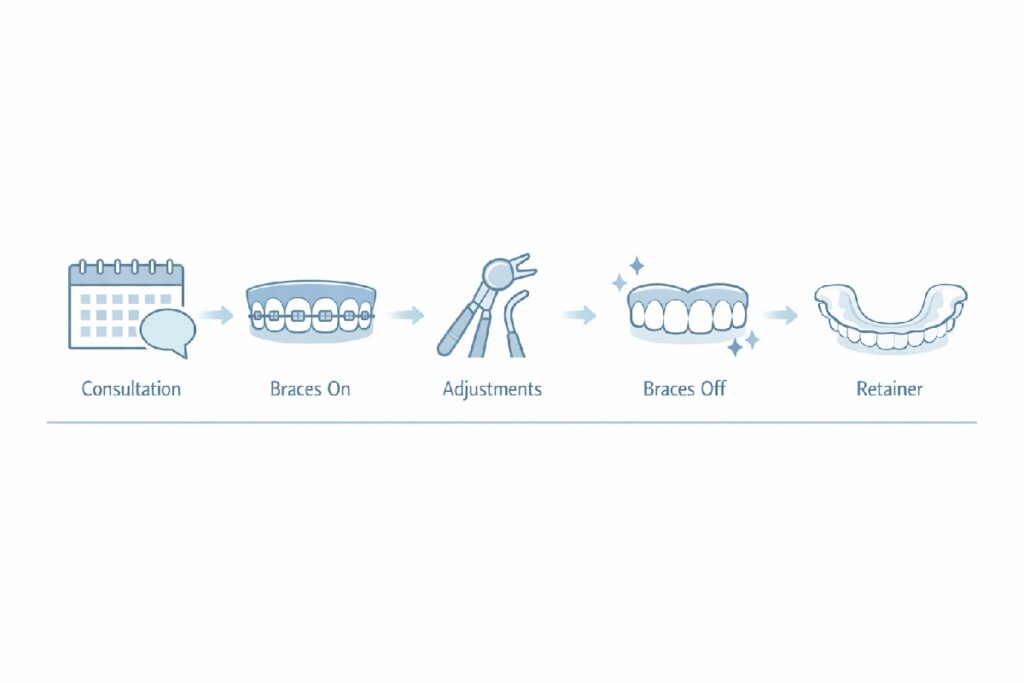
Table of contents
- Key Takeaways
- Quick Answer — How Long Do You Have to Wear Braces?
- Why Braces Treatment Time Varies From Person to Person
- Braces Timeline by Age Group
- How Often Do You Need Orthodontic Visits?
- How Long After Consultation Until You Get Braces?
- How Long Does It Take to Put Braces On?
- How Different Types of Braces Affect Treatment Length
- Can Braces Take Longer Than Planned?
- Can Braces Be Finished Faster? What Actually Helps vs What Doesn’t
- Is Braces Treatment Worth the Time Commitment?
- What Happens After Braces Come Off?
- How to Get an Accurate Timeline for Your Case
- Conclusion — Braces Are a Time Commitment, Not a Mystery
Quick Answer — How Long Do You Have to Wear Braces?
Most patients wear braces for 18 to 24 months, with average time for braces treatment is around 18 months. Mild crowding may resolve in 12 to 15 months, while complex bite corrections can require 24 to 36 months.
Your specific braces treatment duration depends on severity, age, type of correction needed, and compliance. Orthodontists can’t provide exact timelines online,every smile is unique. At Murray Orthodontics, we create a personalized treatment plan during your consultation.
Why Braces Treatment Time Varies From Person to Person
Understanding what affects treatment duration helps you set realistic expectations.
Severity of crowding, spacing, or bite issues
Complexity is the biggest factor in determining how long braces stay on. Mild crowding may take 12 to 15 months, while severe crowding often requires 20 to 24 months.
Significant spacing, rotated teeth, or extensive movement needs take more time. Your orthodontist addresses your malocclusion severity while prioritizing safe, stable tooth movement.
Type of orthodontic problem being corrected
Different orthodontic problems require different timelines. Straightening crowded teeth typically takes less time than correcting complex bite issues.
Overbites, underbites, overjets, crossbites, and open bites often require phased treatment. Bite correction involves careful coordination, extending the overall braces timeline.
Age and bone response (children vs adults)
Age affects the rate of tooth movement. Younger patients’ bones respond quickly to orthodontic forces.
Children and teens typically complete treatment in 12 to 24 months due to efficient bone remodeling. Adults achieve beautiful results too, though bone remodeling happens more gradually. Adult braces typically take 18 to 30 months, reflecting slower biological response rather than treatment limitations.
Patient compliance (elastics, hygiene, appointments)
Following your orthodontist’s instructions directly impacts your braces treatment time. Wearing elastics as prescribed, maintaining excellent hygiene, and attending appointments keeps treatment on schedule.
Patients with consistent elastic wear, braces protection, and clean teeth typically finish on time or early. Good compliance demonstrates commitment to optimal results.
Missed visits and broken appliances
Missed adjustments add weeks to the timeline. Broken brackets, loose bands, or damaged wires interrupt progress and require repairs.
Frequent breakage signals a need to adjust eating habits or better protect braces. Missing appointments disrupts the planned sequence and extends how long you need braces for your specific case.
Braces Timeline by Age Group
Duration of braces varies by age due to bone development, treatment goals, and biological response differences.
Children and early orthodontic treatment (Phase 1 vs Phase 2)
Early treatment typically begins ages 7 to 10 with mixed teeth. Phase 1 lasts 9 to 18 months, addressing severe crowding, crossbites, or jaw discrepancies.
After Phase 1, children take a break while permanent teeth emerge. Phase 2 begins in early teens (ages 11 to 14) and lasts 12 to 24 months, completing alignment once all permanent teeth erupt. Not every child needs two phases, many receive comprehensive treatment during teen years only.
Teen braces — what’s typical and why
Most teens wear braces 12–24 months, making adolescence ideal. Teens benefit from completed jaw growth and active bone remodeling, allowing efficient movement. Teenage patients typically begin treatment ages 11–14, finishing before or during high school.
Adult braces — are they effective, and do they take longer?
Adult braces are highly effective. Treatment usually ranges 18–30 months, sometimes slightly longer than teen treatment. Adults often show exceptional compliance, offsetting slower bone response. Many achieve results equal to or better than teen outcomes, improving both aesthetics and oral health.
How Often Do You Need Orthodontic Visits?
Understanding your appointment schedule helps you plan around work, school, and commitments.
Typical adjustment schedule (every 4 to 8 weeks)
Most patients visit Murray Orthodontics every 4 to 8 weeks for adjustments. Intervals depend on treatment plan and tooth response. Regular visits maintain progress and allow close monitoring. Younger patients may need more frequent visits; adults sometimes space visits 6–8 weeks apart.
What happens during adjustment appointments
Your orthodontist examines movement, replaces wires with progressively stronger ones, and may change elastic configurations. Appointments typically last 15 to 30 minutes.
Your orthodontist checks loose brackets, evaluates bite changes, and modifies treatment as needed. These visits include opportunities to ask questions and receive maintenance guidance.
How visit frequency affects total treatment time
Consistent attendance keeps treatment on schedule. Missing appointments disrupts planned tooth movement and extends how long braces stay on.
Each appointment represents carefully timed progress. Regular visits every 4 to 8 weeks ensure timely adjustments and immediate issue resolution. Patients attending all appointments typically complete treatment within estimates.
How Long After Consultation Until You Get Braces?
Many patients wonder how long does it take to get braces after their first appointment. Understanding this timeline helps you plan accordingly.
The braces consultation process
Your initial consultation includes a comprehensive exam, photos, X-rays, and sometimes impressions. The orthodontist evaluates bite, alignment, jaw relationship, and oral health. Goals, options, estimated timeline, and costs are discussed.
How long does it take to get braces after consultation?
Most patients receive braces 1–4 weeks after consultation, depending on scheduling and preparatory treatments. Some can get braces the same day if ready.
What delays getting braces after your consultation
Extractions, cavities, extra diagnostic records, or insurance approval may extend the timeline. Your orthodontist provides a clear plan.
How Long Does It Take to Put Braces On?
Understanding the placement appointment reduces anxiety and helps you plan your day.
Braces Placement Appointment
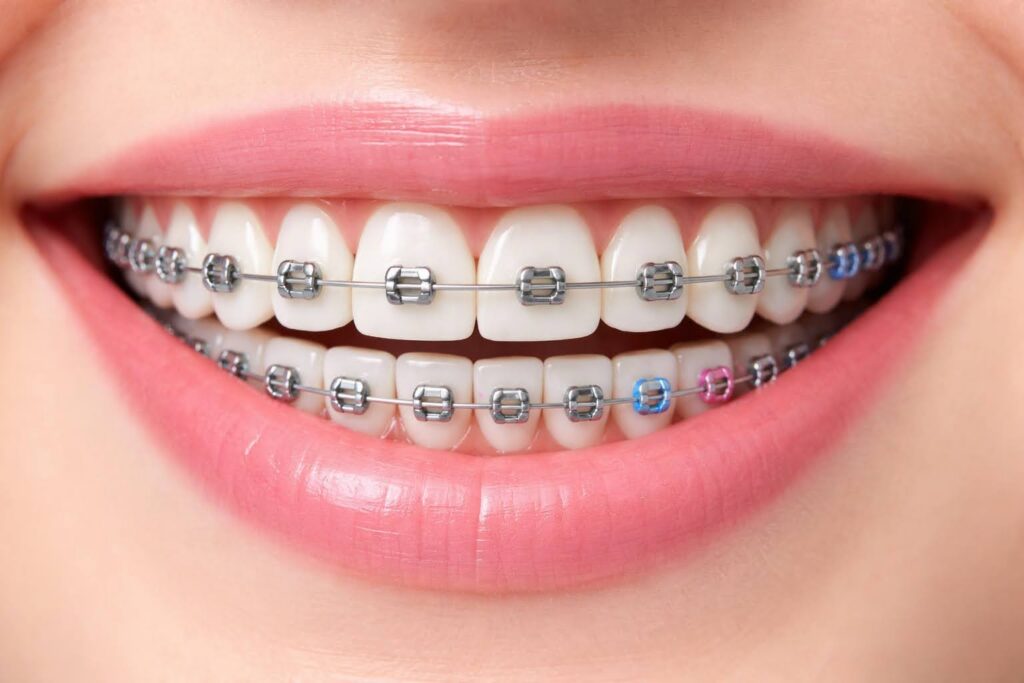
Placing braces typically takes 1–2 hours for upper and lower teeth. This includes cleaning, bracket placement, wire insertion, and elastic ties. Some orthodontists stage treatment, but most complete both arches in one visit.
First-Day Expectations
You may feel fullness initially. Your orthodontist demonstrates brushing, flossing, and care instructions for the first day.
How Different Types of Braces Affect Treatment Length
Braces type influences your experience but may not dramatically change overall braces treatment duration.
Traditional metal braces
Metal braces remain most efficient for complex problems, typically achieving results within 12 to 24 months. They’re particularly effective for severe crowding, significant rotations, and complex bite issues.
Ceramic braces
Ceramic braces function identically to metal braces but use tooth-colored brackets for discretion. How long are braces on for when using ceramic brackets? Treatment duration typically matches metal braces,the difference is purely aesthetic.
Ceramic brackets require slightly more care to avoid staining but offer the same reliable results. Many adults and image-conscious teens prefer ceramic braces for their effectiveness and discretion blend.
Clear aligners (Invisalign-style treatment)
Clear aligners work well for mild to moderate cases, typically requiring 12 to 18 months for straightforward corrections. They offer excellent aesthetics and removability but demand exceptional compliance.
Aligners must be worn 20 to 22 hours daily for predicted results. Treatment may extend with inconsistent wear. Clear aligners effectively address spacing, mild crowding, and minor bite issues but may not suit complex cases requiring significant rotation or bite correction.
Why treatment-time differences are often smaller than expected
Regardless of braces type, safe tooth movement has biological limits. Teeth move through bone remodeling, occurring at relatively consistent pace across appliance types.
Problem severity and compliance matter far more than specific braces type. Your orthodontist helps you select the appliance balancing treatment needs, lifestyle preferences, and aesthetic concerns.
Can Braces Take Longer Than Planned?
Understanding factors extending treatment helps you stay on schedule.
Common reasons timelines extend
Several factors can extend how long you have to wear braces beyond estimates. Frequent broken brackets interrupt progress and require extra appointments. Poor elastic compliance slows tooth movement significantly.
Poor oral hygiene can lead to cavities or decalcification, causing treatment pauses. Missed adjustment visits disrupt the planned sequence. Teeth sometimes move slower than expected, or unexpected complications occur. Growth changes in teens may also require plan adjustments.
Can braces take only 6 months?
You may see promotions for six-month braces or cosmetic-only fixes. True six-month treatment is limited to minor front-tooth movement and does not correct underlying bite problems. Comprehensive correction usually takes 10–12 months for very mild cases. Cosmetic-only six-month treatments leave functional issues unresolved. Most patients benefit from full treatment addressing both appearance and bite.
How long do braces take for crowded teeth?
Crowding is among the most common reasons for braces, with duration varying by severity. How long do you need braces for crowding depends on severity and whether extractions are needed.
Mild crowding often resolves in 12–16 months, moderate cases take 16–20 months, and severe crowding may need 20–30 months, especially if extractions or complex bite corrections are required. Age and patient compliance also affect how long braces are needed. How long crowded teeth take to straighten reflects individual response and commitment to following instructions.
What patients can control vs what they can’t
You control several factors that influence treatment duration. Wearing elastics as prescribed, maintaining excellent oral hygiene, protecting your braces, and attending all appointments keeps treatment on schedule.
Factors beyond your control include biological response, problem complexity, unexpected complications, or natural bone remodeling variations. Your orthodontist manages these with careful planning and monitoring.
Why orthodontists prioritize safe movement over speed
Why do you have to wear braces for so long? Teeth move through bone remodeling, a biological process requiring adequate time for safe, stable results.
Moving teeth too quickly causes root resorption (root shortening), bone loss, or unstable results requiring retreatment. Orthodontists follow evidence-based protocols developed through decades of research. These protocols prioritize long-term oral health over speed, ensuring beautiful results last a lifetime.
Can Braces Be Finished Faster? What Actually Helps vs What Doesn’t
Many patients wonder if they can reduce their braces treatment duration. Understanding what works helps you make informed decisions.
What patients can realistically control
Perfect compliance with wearing elastics as prescribed can reduce treatment time by several months. Excellent oral hygiene prevents treatment interruptions. Protecting your braces eliminates repair delays.
Never missing scheduled adjustment appointments maintains steady progress. Following dietary restrictions and care instructions minimizes broken brackets. Patients doing everything right typically finish on schedule or slightly early, rarely dramatically faster, but efficiently within the planned timeline.
Limits of “accelerated orthodontics” claims
Some practices promote techniques like micro-osteoperforations or vibration devices claiming faster results. Evidence shows only modest benefits in select cases.
Dramatic claims about halving treatment time often involve cosmetic-only corrections rather than comprehensive treatment. Always ask about supporting research, potential risks, and whether the accelerated approach fully addresses your orthodontic needs. Most mainstream orthodontists remain cautious about acceleration techniques lacking robust long-term evidence.
Why faster isn’t always safer or more stable
Tooth movement follows a biologically determined pace. Pushing teeth faster can harm roots, supporting bone, or create results that relapse. Research shows controlled forces produce the most stable outcomes. The goal is not speed, but efficient treatment respecting biological limits. Murray Orthodontics prioritizes approaches proven by research and focused on long-term oral health.
Is Braces Treatment Worth the Time Commitment?
The question isn’t “how long” but whether 12–24 months brings lasting benefits. For most patients, the answer is yes.
Reframe duration as phased progress
Instead of seeing treatment as “waiting,” think of it as progressing through planned phases. Each adjustment represents measurable movement. Most patients notice changes in the first few months. Progress is tracked at each visit, showing improvements and making treatment feel shorter. Many report time passes faster than expected once started.
Explain why orthodontic timelines exist
Treatment timelines reflect biological realities, not arbitrary decisions. Teeth move through bone remodeling, a living tissue process that adapts gradually. Adequate time ensures safe movement without damaging roots or bone. Comprehensive treatment aligns teeth and corrects bite, supporting oral health long-term. Rushing compromises outcomes. Evidence-based protocols developed over decades ensure treatment is both safe and effective.
Reinforce long-term benefit vs short-term inconvenience
The average braces treatment time of 18 months represents a brief investment compared to decades of benefits. Properly aligned teeth are easier to clean, reducing cavities and gum disease risk. Correct bite function reduces excessive wear and potential jaw problems.
Beyond health benefits, most patients report increased confidence and smile satisfaction. The short-term commitment of regular appointments and daily care creates lasting improvements affecting your health, appearance, and quality of life for years.
What Happens After Braces Come Off?
Understanding the retention phase helps you protect your orthodontic investment and maintain beautiful results.
Retainers as Part of the Total Timeline
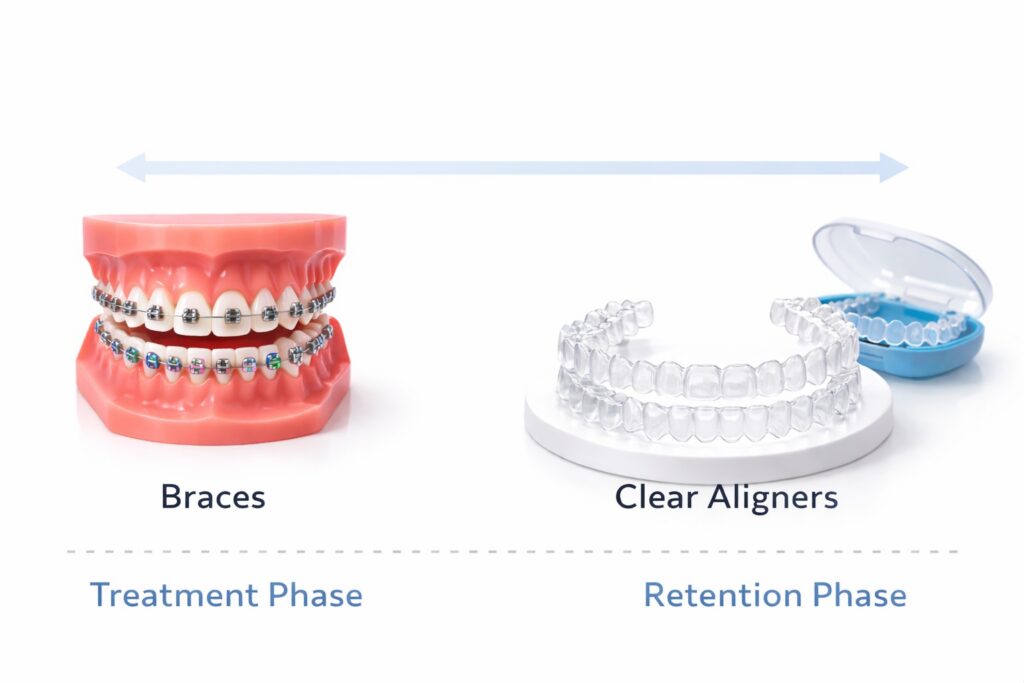
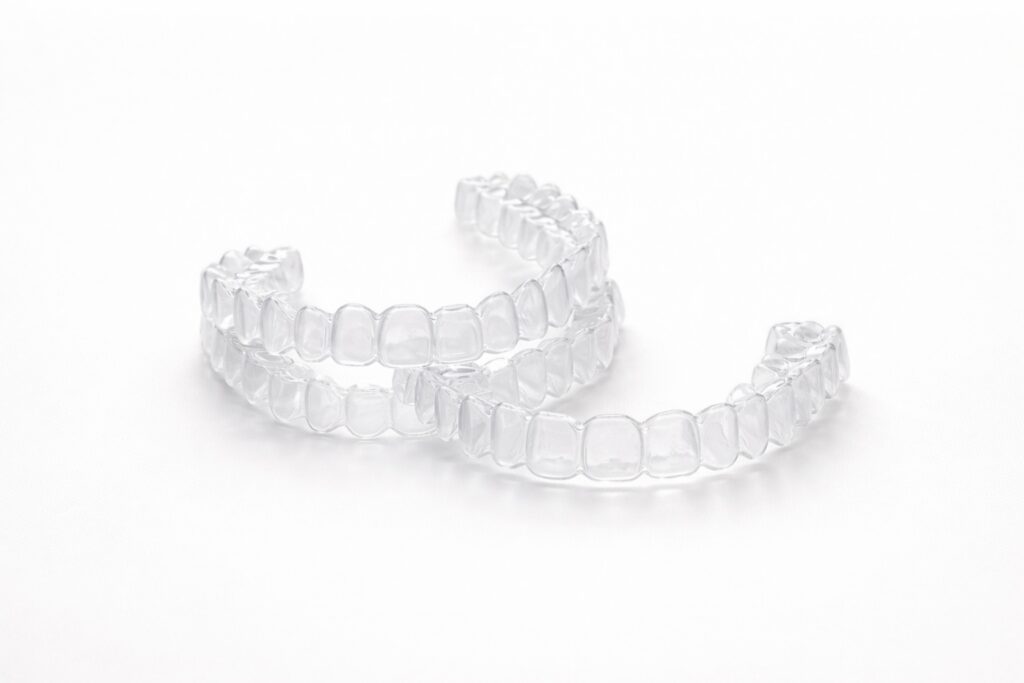
After braces, retainers maintain results. Initially, most wear them full-time (except when eating) for several months. This stabilizes teeth in new positions. Later, most transition to nighttime-only wear. Retainers are essential; skipping them can lead to unwanted movement requiring retreatment.
Long-Term Stability and Adult Retention Needs
Teeth naturally shift over time. Long-term retainer use protects your investment. Many adults wear retainers a few nights per week for life. Retainers are simple, comfortable, and much easier than repeating orthodontic treatment. Murray Orthodontics provides guidance to maintain a beautiful, permanent smile.
How to Get an Accurate Timeline for Your Case
Online information provides useful context, but only professional evaluation can determine your specific orthodontic treatment duration.
Why online averages aren’t enough
Every person’s teeth, bone structure, bite relationship, and orthodontic needs are unique. Generic timelines can’t account for your specific severity of crowding, type of bite problem, age, or individual biological response.
Factors affecting your timeline include jaw relationships, tooth root positions, periodontal health, and treatment goals only thorough clinical examination can reveal. Online estimates help you understand general expectations but can’t replace personalized evaluation.
What Murray Orthodontics evaluates during a consultation
Your consultation includes a full exam of teeth, bite, jaw, and oral health. Diagnostic records like photos, X-rays, and scans allow detailed planning. Orthodontists analyze malocclusion, growth patterns, and patient preferences to create a customized plan. Realistic timelines, factors affecting duration, and any concerns are discussed. Murray Orthodontics is known for clear, honest communication, reflected in excellent reviews.
Ready to learn your personal braces timeline? Schedule a consultation with Murray Orthodontics for an accurate, honest treatment estimate based on your unique needs.
Conclusion — Braces Are a Time Commitment, Not a Mystery
Most people wear braces for 12 to 24 months, with average treatment around 18 months. Your specific timeline depends on severity of crowding or bite issues, age and bone response, type of correction needed, and how well you follow treatment instructions.
Understanding what affects how long braces take helps you approach treatment with realistic expectations and confidence. The process of getting braces begins with consultation, moves to braces placement (typically 1 to 4 weeks later), progresses through regular adjustments every 4 to 8 weeks, and concludes with a retention phase maintaining results.
At Murray Orthodontics, we believe in transparent communication and evidence-based treatment planning. We never make false promises about unrealistic timelines or guarantee specific durations. Instead, we provide honest assessments based on your individual case, explain what affects your timeline, and partner with you throughout treatment.
Whether you’re considering braces for your child, teen, or yourself as an adult, the time commitment yields lifetime benefits including improved oral health, easier dental hygiene, better chewing function, and increased confidence in your smile.
Schedule your consultation today with Murray Orthodontics for personalized evaluation and an accurate treatment timeline. Our experienced team will answer your questions, explain your options, and help you understand exactly what to expect from start to finish.
A: Most patients wear braces for 12 to 24 months, with the average braces treatment time around 18 months. Your specific timeline depends on the severity of crowding or bite issues, your age, and how well you follow treatment instructions.
A: Adjustment appointments are usually scheduled every 4 to 8 weeks and last 15 to 30 minutes. Your orthodontist monitors progress, changes wires or elastics as needed, and ensures treatment stays on track.
A: Adult braces typically take 18 to 30 months due to slower bone remodeling in mature tissue, which may be slightly longer than teen treatment. However, adults achieve excellent results and often show superior compliance.
A: Treatment duration differences between types are often smaller than expected. The severity of your orthodontic problem and your compliance with instructions matter more than the specific type of braces you choose.
A: Most patients receive braces 1 to 4 weeks after their consultation, depending on scheduling and any necessary preparatory treatments. Some patients can even have braces placed the same day if ready.
A: The braces placement appointment typically takes 1 to 2 hours for a full set of upper and lower braces. This includes bracket placement, wire insertion, and care instructions.
A: Mild crowding typically resolves in 12 to 16 months, moderate crowding takes 16 to 20 months, and severe crowding may require 20 to 30 months depending on whether extractions are needed and age factors.
